


Supported Decision Making and Active Support
At Northcott, we believe every customer has the right to make decisions about their own life and to be supported to live in a way that reflects their choices, goals, culture, relationships and everyday routines. Supported Decision Making and Active Support are central to how we work with customers every day.
These approaches are about doing things with people, not for people. They help customers be involved in decisions, take part in daily life, build skills, stay connected and have greater choice and control over the supports they receive.
What is Supported Decision Making?
Supported Decision Making means giving a person the right support to make, communicate and act on their own decisions. It recognises that everyone may need help with decisions at different times, and that people with disability have the same right as anyone else to make choices about their life.
For some customers, support may include extra time to think about decisions, information in Plain English or Easy Read, pictures, objects, demonstrations, communication devices, trusted supporters, or help to understand the risks and benefits of different options.
The decision remains the customer’s decision. Our role is to support the customer to understand their options, express their will and preferences, and make choices wherever possible.
What is Active Support?
Active Support is a way of working that helps customers be involved in everyday life. It means staff look for opportunities for customers to participate, make choices, build confidence and develop skills as part of normal daily routines.
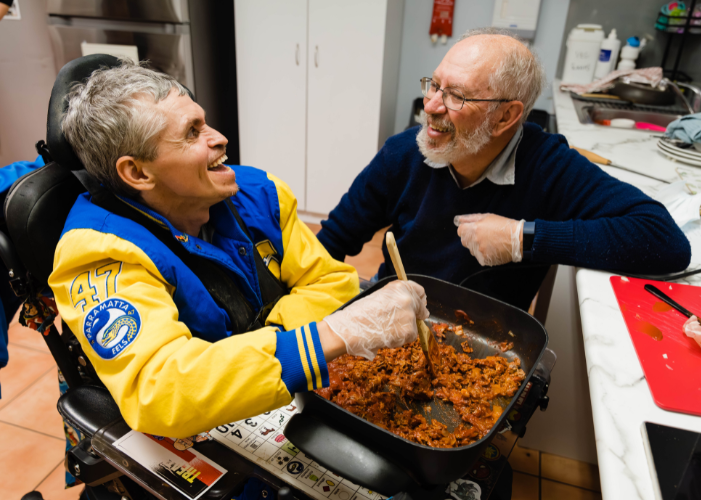
Active Support may happen during everyday activities such as preparing meals, choosing clothes, planning the day, shopping, cleaning, spending time with others, joining community activities, or making decisions about the home.
Active Support is not about doing everything for a customer. It is about providing the right amount of help so the customer can be involved as much as possible, in a way that suits them.
How Supported Decision Making and Active Support Work Together
Supported Decision Making and Active Support are closely connected. Supported Decision Making helps customers have a voice in the decisions that affect them. Active Support helps those decisions become part of everyday life.
For example, a customer may decide they want to cook more often, spend time with friends, learn a new skill, change their routine, or be more involved in household decisions. Active Support helps staff turn those choices into practical opportunities during the week.
Together, these approaches support customers to have more say, more involvement and more control over their home, relationships, supports and community life.
What Customers Can Expect from Northcott
- We will listen to what is important to each customer.
- We will support customers to make choices about their daily life, home, supports, relationships and goals.
- We will provide information in ways customers can understand.
- We will respect each customer’s communication style, culture, identity, values and preferences.
- We will support customers to involve trusted people if they want help with a decision.
- We will help customers understand options, risks and benefits so they can make informed choices.
- We will support customers to try new things, build skills and take part in everyday activities.
- We will document customer preferences and decisions so staff provide consistent support.
Examples of Everyday Supported Decision Making and Active Support
Everyday area and how Northcott may support the customer
- Meals and food choices
- Use pictures, shopping lists, recipes or demonstrations so the customer can choose meals, help prepare food or try new options.
- Daily routines
- Support the customer to choose when and how they complete daily activities, such as getting ready, relaxing, going out or taking part in household tasks.
- Home Life
- Involve customers in decisions about shared spaces, visitors, privacy, household routines and how the home feels.
- Community participation
- Support the customer to explore activities, understand options, plan transport and take part in community life.
- Goals and skills
- Break goals into smaller steps and provide the right level of support so the customer can build confidence and independence over time.
- Health and wellbeing
- Help the customer understand information, ask questions, involve trusted supporters if they choose, and communicate their preferences.
Supporting Communication
People communicate in different ways. Some customers use speech. Others may use signs, gestures, facial expressions, behaviour, pictures, objects, technology, communication devices, interpreters or support from people who know them well.
Northcott staff work to understand each customer’s preferred way of communicating. This helps staff recognise what the customer likes, dislikes, wants, needs and chooses. It also helps staff provide information in a way that makes sense to the customer.
Choice, Rights and Dignity of Risk
Customers have the right to make choices, including choices that involve some risk. This is often called dignity of risk. Northcott supports customers to understand risks and benefits, think through options, and make decisions with the right safeguards in place.
Our staff balance duty of care with each customer’s right to choice, control and independence. We aim to support safe and meaningful participation, without unnecessarily limiting a customer’s rights or opportunities.
How This Supports Quality and Inclusion
Supported Decision Making and Active Support reflect Northcott’s commitment to inclusion, respect and person-centred support. They also align with the expectations of the NDIS, including the focus on participant voice, rights, informed choice, independence and quality support in the home.
By embedding these approaches in everyday practice, Northcott supports customers to be active participants in their own lives, not passive recipients of support.
Our Commitment
Northcott is committed to supporting customers to make decisions, express their preferences, take part in everyday life and live in homes and communities where they are respected, included and heard.
Supported Decision Making and Active Support are not separate tasks or once-a-year conversations. They are part of what good support looks like every day.